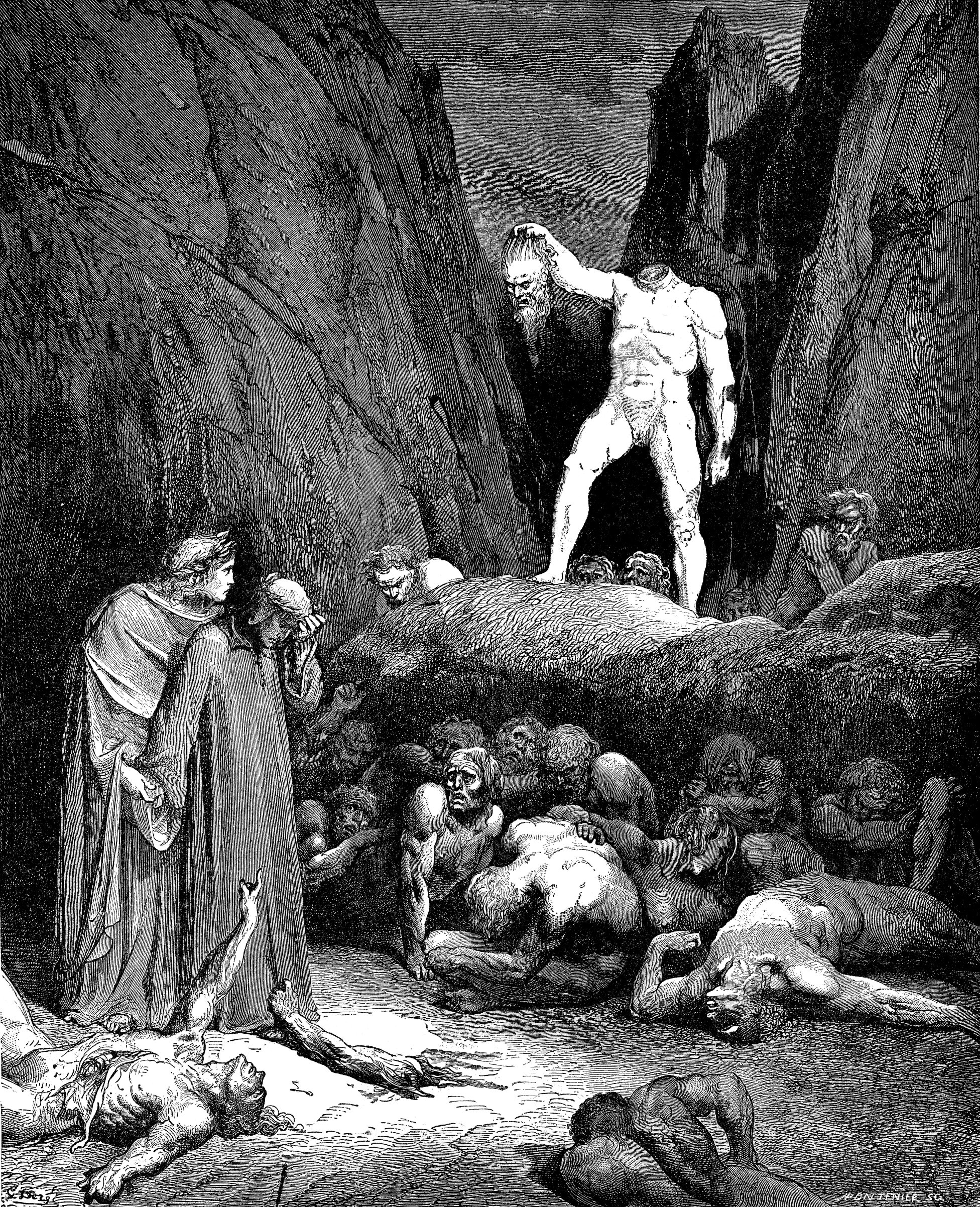
The eighth circle of Hell is dedicated to the sin of fraud, representing a profound descent into premeditated evil where reason—a gift from God—is maliciously used to deceive and harm others. This circle, which Dante calls Malebolge or "Evil Ditches," is a massive, funnel-shaped, rocky pit divided into ten separate, concentric trenches. It houses those who committed "simple fraud," which involves deceiving people who do not have a special bond of trust with the sinner, distinguishing it from the deeper ninth circle of treachery.
The ten bolge (ditches) contain varied, ironic punishments designed to reflect the nature of each fraud. These include the first, where panders and seducers are whipped by demons; the second, where flatterers are immersed in human excrement; the third, where simonists (who abused church offices) are stuck upside down in holes with their feet burning; and the fourth, where sorcerers and fortunetellers have their heads twisted backward, forcing them to walk backward for eternity. Other ditches house corrupt politicians in boiling pitch, hypocrites wearing lead-lined cloaks, and thieves tormented by serpents.
The last few ditches of the Malebolge deal with more severe deceptions. The eighth ditch contains evil counselors, such as Ulysses and Guido da Montefeltro, who are permanently engulfed in tongues of fire, representing the way their speech concealed their fraudulent thoughts. The ninth features the sowers of discord, who are hacked apart by a demon’s sword, reflecting how they tore people apart in life. Finally, the tenth ditch holds falsifiers, including alchemists and counterfeiters, who are plagued with disgusting diseases and physical deformities, symbolizing the "disease" they brought to a stable society.
The entrance to this circle is guarded by Geryon, a monstrous creature with a human face and a scorpion tail, perfectly symbolizing the deceptive nature of fraud—appearing honest on the outside while stinging in the back. Fraud is considered more heinous than violence in Dante's cosmology because it is a human-specific sin that destroys the foundational trust and community holding society together. By the end of this layer, Dante has shown a deep, systematic condemnation of those who use intellect not for good, but for destruction.
Geryon
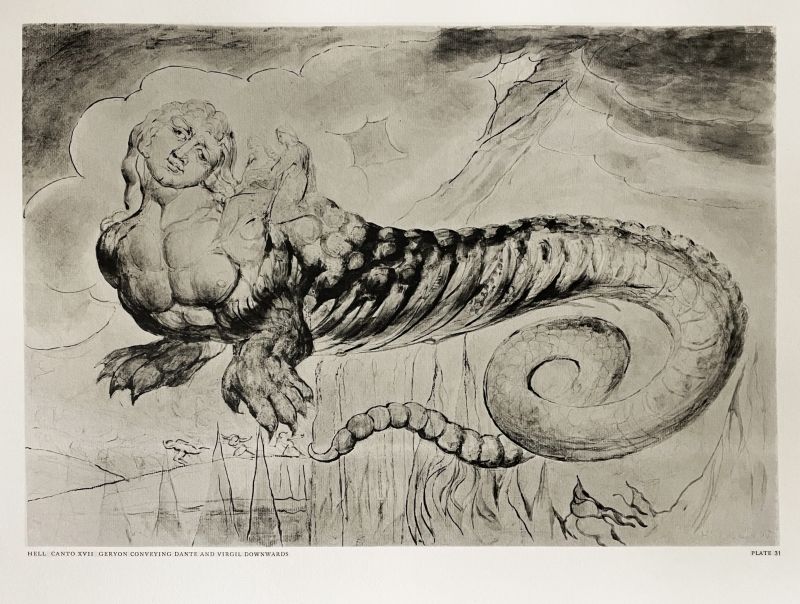
Geryon is reimagined from classical mythology to serve as the physical embodiment of Fraud. Unlike the three-headed giant slain by Hercules in myth, Dante’s Geryon is a chimerical beast with a strikingly deceptive appearance: the honest, benign face of a just man, the furry paws of a lion, a reptilian body covered in intricate, colorful, and alluring patterns, and a dangerous scorpion’s stinger on its tail. This creature resides between the seventh circle (Violence) and the eighth circle (Fraud), serving as a bridge to the lowest parts of Hell.
Geryon is summoned by Virgil to transport the poets down to the Malebolge (the eight circle, or "evil ditches"). The descent is terrifying for Dante, who describes riding on Geryon’s back while observing the surrounding abyss, whirlpools, and flames. During the flight, Geryon spirals downward, moving slowly, a contrast to his swift, arrow-like departure once he deposits the poets at their destination. This action signifies the transition from sins of violence to the much worse sins of deception and fraud.
Symbolically, Geryon represents the nature of deceit: that which appears pleasant, honest, and beautiful on the surface (the face) but is actually treacherous and poisonous (the tail). Dante's fear during the flight is compared to that of Icarus or Phaethon, emphasizing the extreme danger and unnatural nature of this method of travel. Furthermore, Geryon serves as a self-referential image for the poem itself, embodying the "fable" or "deceptive" nature of the art of poetry that, like fraud, creates a "false appearance" of reality.